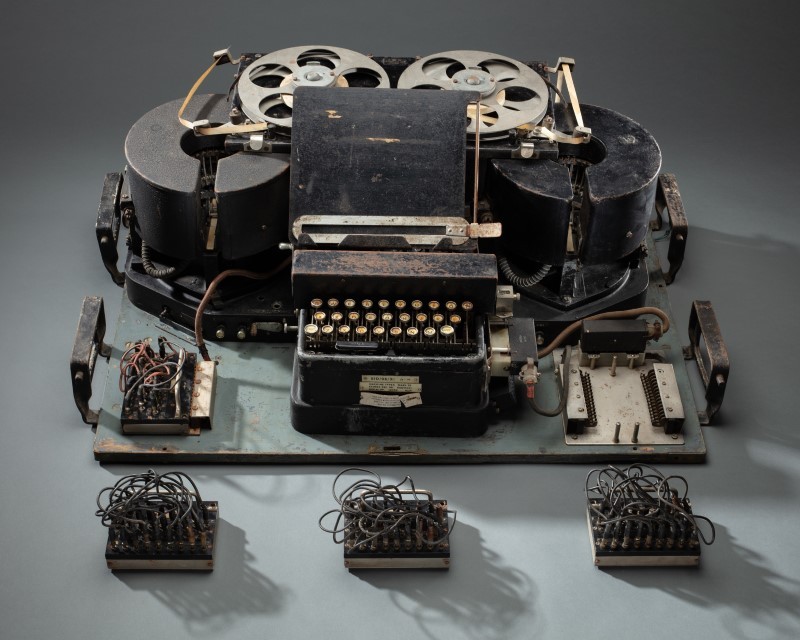
Developed in 1934, the Typex protected top-secret information for the Allies throughout the war and into the 1950s. The Australian government and Sigint (Signals intelligence) authorities used Typex machines throughout this period.
The British developed several variants, each tailored to a particular purpose or security improvement. For example, incorporating additional plugboards. It was a very versatile machine and could be modified for use as a common cipher machine for securing communications between British Commonwealth nations and the United States authorities, as well as for top-secret military communications.
The British-developed Typex could be modified to emulate the settings of the Enigma, the famous German cipher machine ‘broken’ by Bletchley Park during the Second World War.
Once the Allies solved the challenge of discovering the Enigma settings, they used the Typex for decrypting enemy messages.
From its establishment in 1947, the Defence Signals Bureau generated Typex machine settings and plugboard settings for use across the Australian government and its military forces and liaised with British counterparts regarding the availability of new variants and ongoing security suitability.
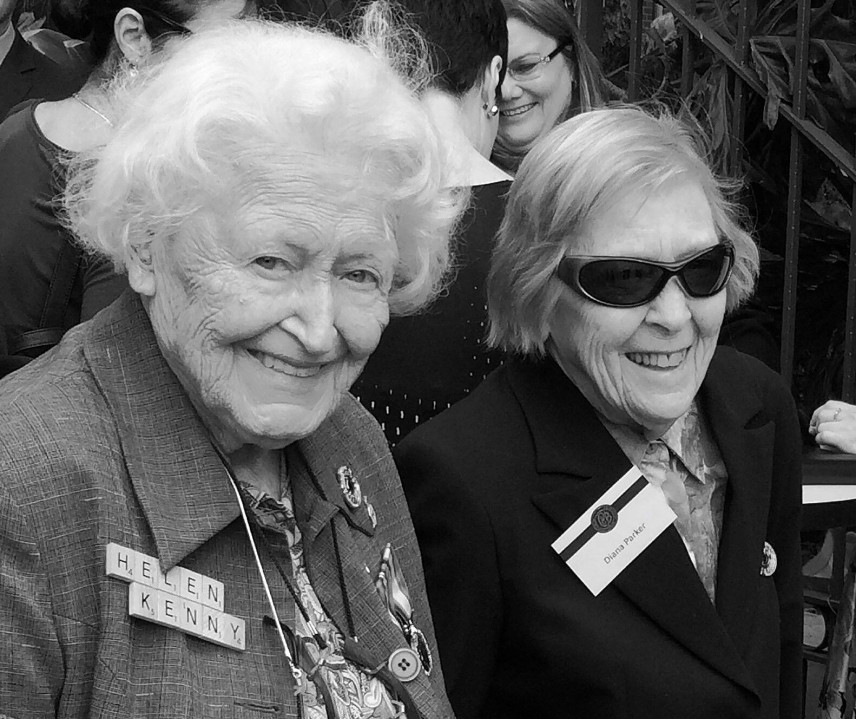
Many decades after the war, Central Bureau’s Typex operators, including Helen Kenny (Frizzell) and Diana Parker, received Bletchley Park Commemorative Badges for their contribution to the Allied code-breaking effort.
Typex machine - ASD Records
Helen Kenny (Frizzell) and Diana Parker pictured at a 70th reunion in 2015 (Sydney Morning Herald)