Central Bureau identity discs

In 1942 Australian and United States servicemen and women moved into a Brisbane mansion, ‘Nyrambla’, and set up a complex and secretive signals intelligence unit called Central Bureau.

After the war, the site near the former military camp where Central Bureau personnel had been billeted was sub-divided and sold. The Hill family bought a block and made a home there, complete with garden and chicken coop. One day, in the late 1950s, Peter Hill saw the chickens scratching up some military paraphernalia, including identity discs worn by Australians associated with Central Bureau.

Hill donated the tags to the Central Bureau Intelligence Corps Association in 2012. He believed a hole had been dug as a rubbish dump where the discs were discarded, perhaps to hide any connection the wearer had with the top-secret unit. Among the recovered discs were those belonging to Lieutenant Colonel ‘Mic’ Sandford, Assistant Director of Central Bureau, and Captain Victor Lederer, a talented linguist and expert traffic analyst — both foundation members of the unit.

It was most unusual for the discs to have become separated from their owners. These personnel would not have been able to tell anyone about the work they were doing, not even their own families.
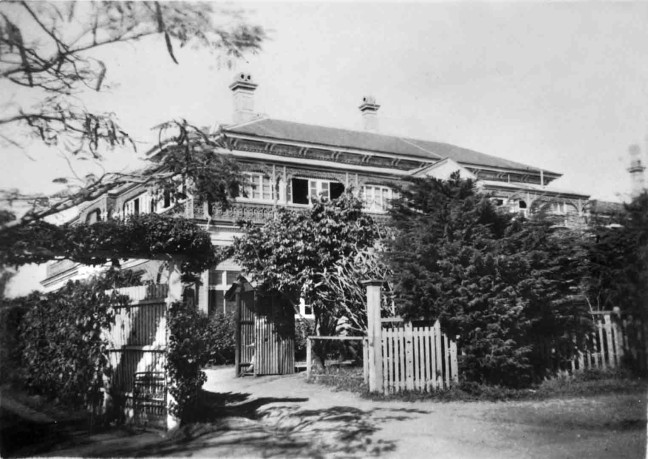
A large double-storey mansion with a white fence and large bushes in the front yard.
Colonial mansion, ‘Nyrambla’ in suburban Brisbane, Central Bureau operated 24 hours a day to perform cryptanalysis, traffic analysis, translation and dissemination.
Source: Australian War Memorial P00125.001
Seven men in uniform stand in two rows on the front stairs of a building.
The Executive Directors of Central Bureau included Lieutenant Colonel Alastair ‘Mic’ Sandford (back row, far right) and Wing Commander H Roy Booth (front row, far right).
Source: Australian War Memorial P01443.010
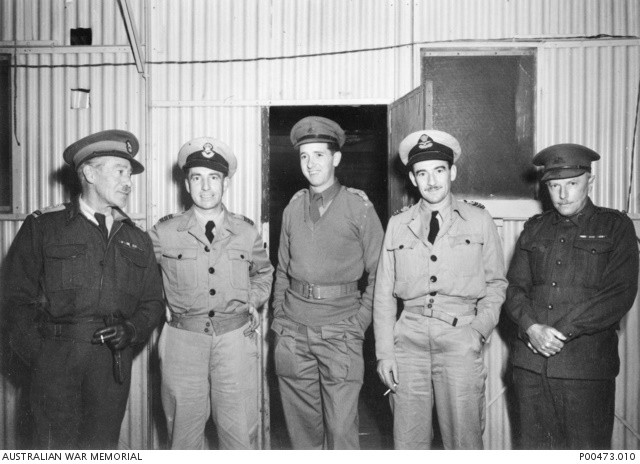
Officers of Central Bureau await air transport to Manila for Colonel Sandford (AWM P00473.010 https://www.awm.gov.au/collection/C39512)’
Lieutenant Colonel Alastair ‘Mic’ Sandford (centre), an Oxford graduate and barrister, led Central Bureau’s Australian Army contingent. Like many who work in intelligence, he was unconventional and fearless, and challenged military stereotypes.
Source: Australian War Memorial P00473.010
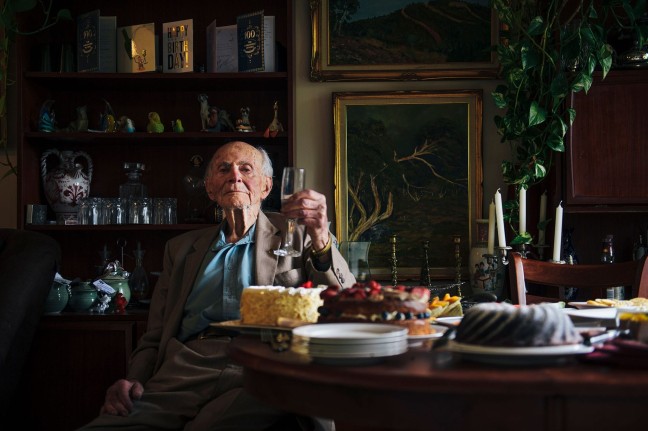
Captain Victor Lederer seated at a table with multiple cakes on it. He raises a glass in his left hand.
Captain Victor Lederer (seen here celebrating his 100th birthday in 2014) gathered intelligence critical to the Allied victory in the battle of the Coral Sea. He was a highly distinguished figure in the field of traffic analysis. Lederer’s identity discs were later discovered in a suburban backyard.
Source: Photographer Rohan Thomson
Acknowledgement of Country icon

Acknowledgement of Country

We acknowledge the Traditional Owners and Custodians of Country throughout Australia and their continuing connections to land, sea and communities. We pay our respects to them, their cultures and their Elders; past, present and emerging. We also recognise Australia's First Peoples' enduring contribution to Australia's national security.

Authorised by the Australian Government, Canberra