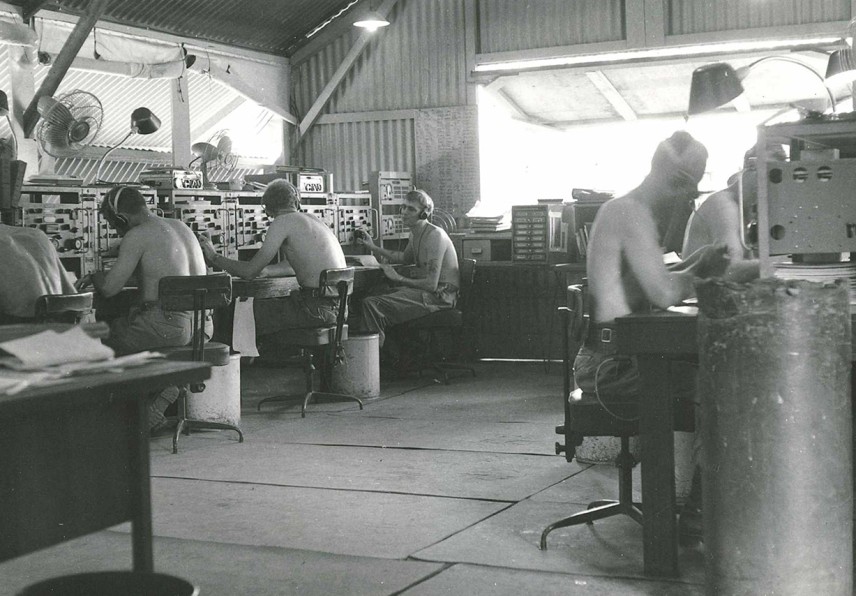
The Vietnam War was one of the first major military operations supported by the Defence Signals Division (DSD), as ASD was known in the 1960s. In 1966, Prime Minister Harold Holt announced an increase in Australia’s contribution to the defence of South Vietnam. As part of Australia’s contribution to the United States intelligence network, DSD deployed liaison officers to Vietnam alongside a signals intelligence support unit known as 547 Troop to provide signals intelligence support to the 1st Australian Task Force (1ATF) and allied forces operating in the Phuoc Tuy area of operations.
The troop’s initial role was to act as a conduit for top secret reports from the American headquarters in Long Binh but the signallers were soon complementing this with intelligence gathered through their own efforts. The troop’s primary role then included intercepting enemy communications and identifying their locations through ground and airborne direction-finding facilities.
547 Signal Troop worked as part of an integrated, cohesive effort with United States (US) Direct Support Units. It started out as a small team of 15 Australian military personnel deployed to Nui Dat in Phuoc Tuy province, the Australian area of operations. By the end of 1967, this number had grown to 35. Although the troop did not come under DSD’s operational control, DSD kept in close touch with technical developments and provided technical training to members before they deployed to Vietnam.
Throughout their deployment to Vietnam, the troop was credited with providing early warning of imminent large-scale enemy action against Australian, US and Thai forces, and was directly credited with saving hundreds of lives. The unit operated from mid-June 1966 until 13 December 1971, when 1ATF withdrew. The Commander of 1ATF regarded the troop as his most valuable source of intelligence.
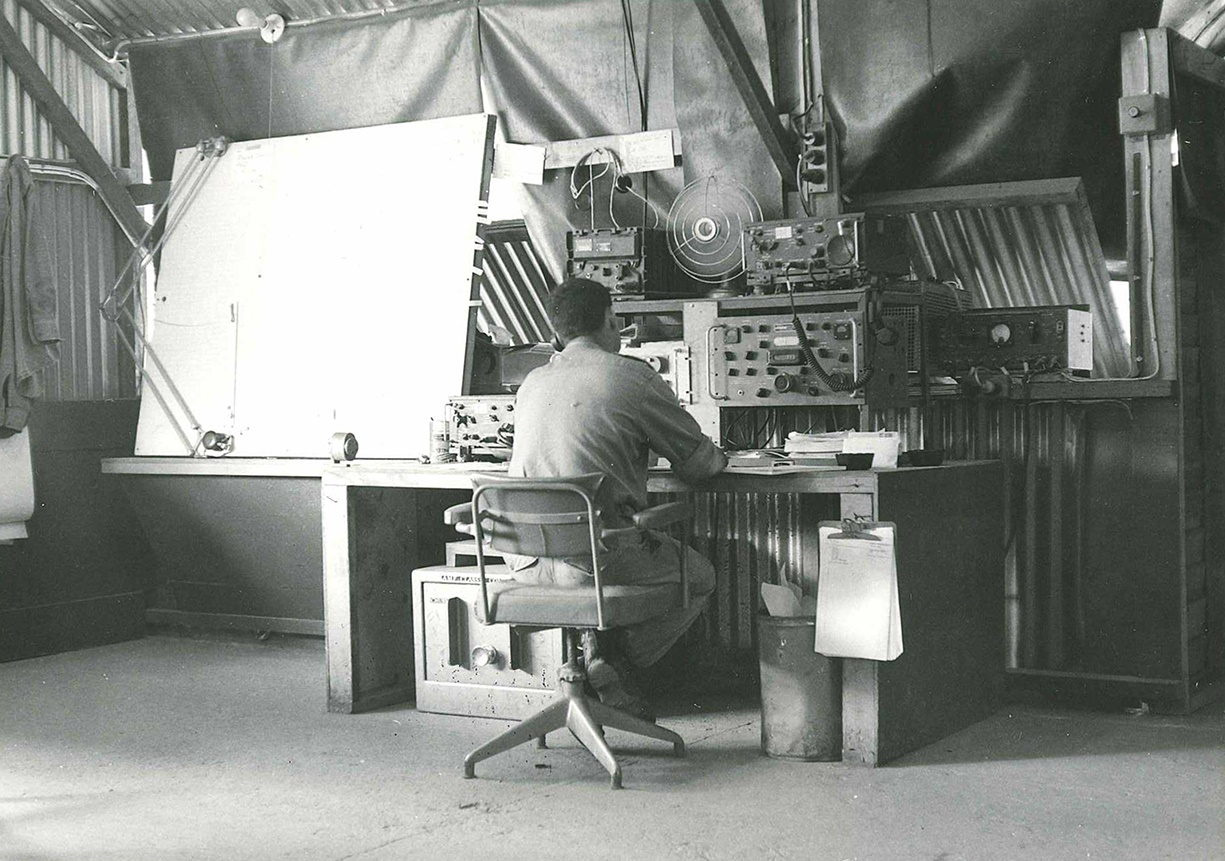
547 Signal Troop Set Room, January 1969 - ASD Records
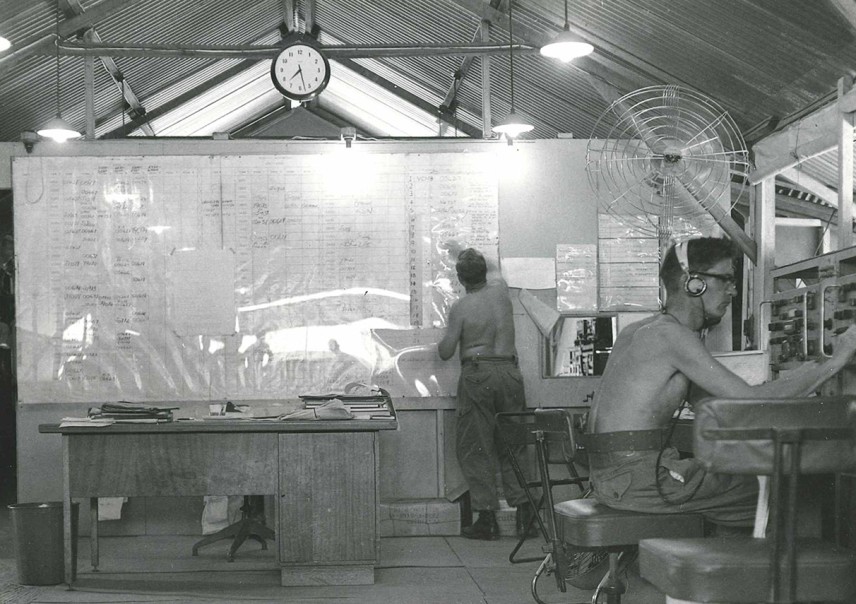
547 Signal Set Room Troop Tasking Board - ASD Records