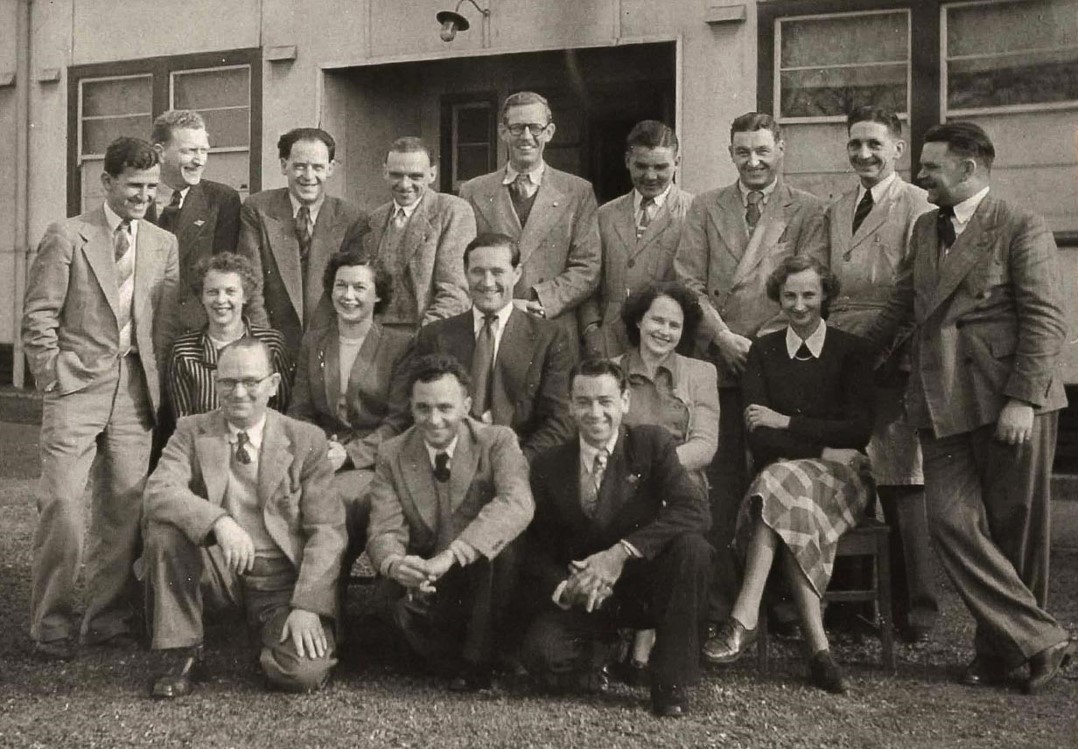
The Australian Signals Directorate’s history began with the creation of the Defence Signals Bureau (DSB) in April 1947. Formed as a peacetime signals intelligence organisation in Albert Park, Melbourne, DSB was born from the remnants of two wartime signals intelligence units, Fleet Radio Unit Melbourne (FRUMEL) and Central Bureau. An organisation primarily comprised of analysts and technologists, DSB’s purpose was to exploit foreign communications and protect communications security in the armed services and government departments.
For the first 30 years of its existence, the organisation was shrouded in secrecy, relatively unknown to the wider Australian public. This changed in 1977 when Justice Robert Marsden Hope handed down his recommendations in the first Royal Commission into Intelligence and Security. Acting upon these recommendations, Prime Minister Malcolm Fraser formally declared the existence of the newly renamed Defence Signals Directorate (DSD) in Parliament 1977 for the first time.
Since it formed more than 75 years ago, the ASD has grown in size, stature and significance to become the statutory agency it is today. During its history, it has also been renamed four times as the Defence Signals Branch (DSB) in 1949, the Defence Signals Division (DSD) in 1964 and the Defence Signals Directorate (DSD) in 1977, before finally becoming the Australian Signals Directorate (ASD) in 2013.
The name changes reflect the way in which the organisation’s mission, mandate and responsibility have grown within the hierarchy of government; the inclusion of ‘Australian’ within the organisation’s name in 2013 reflected ASD’s whole-of-government role in support of Australia’s national security.