
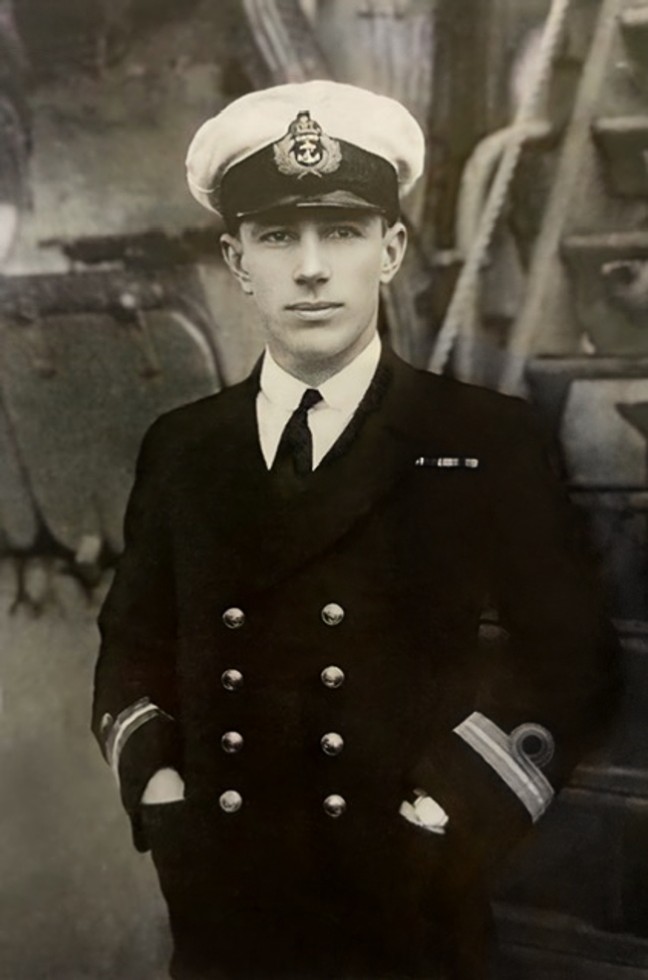
On 7 November 2024, Captain Eric Nave became the first Australian to be included in the National Security Agency/Central Security Service (NSA/CSS) Cryptologic Hall of Honor in recognition of his lifetime of high achievement in the cryptologic field.
Captain Theodore Eric (Eric) Nave OBE RAN RN is one of the most noteworthy figures in Australia’s code-breaking history. Nave’s proficiency at the Japanese language and knack for breaking codes contributed significantly to the allied effort against Japan during the Second World War and earned him the respect of allied military leaders.
Nave joined the Royal Australian Navy (RAN) as a Paymaster Clerk on 1 March 1917, coinciding with an increased interest in Japan by navy senior staff. Nave proved to be extraordinarily proficient in the Japanese language, and from February 1921 to April 1923, the RAN posted him to Japan to learn the nuances of the language. In 1925, the Royal Navy (RN) requested Nave be loaned to them for assignment to the RN’s China Station, aboard HMS Hawkins.
This move ultimately changed his career path. The RN tasked Nave with reading Japanese intercept and breaking Japanese codes and ciphers. By 1927, Nave’s performance had impressed his superiors so much that the Admiralty in London assigned him to the Japanese desk at the Government Code and Cypher School (GC&CS).
One of Nave’s most significant achievements while at GC&CS was the deciphering of the Japanese naval attaché code. This provided the Admiralty with a full transcript of the Japanese negotiating position prior to the commencement of the London Naval Conference of 1930.
In August 1930, Nave’s commission in the RAN ended on his transfer to the RN. In 1937, Nave would once again cross the globe, this time as Head of Cryptanalysis at the Far East Combined Bureau (FECB) based in Hong Kong.
Returning to Australia in 1940, Nave advised on, and supported the formation of an Australian Sigint organisation (the Special Intelligence Bureau – SIB) and trained new code-breakers.
In 1942, SIB and personnel from the former Philippines based US Sigint (Signals intelligence) site combined to create Fleet Radio Unit Melbourne (FRUMEL). During his time with FRUMEL, Nave cracked the JN-4 submarine fleet code, and in May 1942, he and his team of codebreakers contributed significantly to the outcome of the Battle of the Coral Sea.
After the war, Nave was heavily involved in the establishment of the Defence Signals Bureau (DSB). He led the delegation to the British Commonwealth Sigint Conference in London in 1946, ensuring Australia’s inclusion in the allied signals intelligence arrangement that became the UKUSA Five Eyes partnership.
Nave continued to work with DSB, training new cryptanalysts until 17 March 1949, when he took up a position in the newly established Australian Security Intelligence Organisation (ASIO). He retired on 1 March 1959, exactly 42 years after he took up his first position with the RAN.
Nave was appointed as an officer of the Order of the British Empire (OBE) in 1972, and died on 23 June 1993, aged 94.